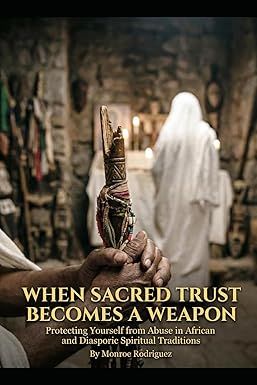
BREAKING THE SILENCE
When Sacred Trust Becomes A Weapon
Protecting Yourself from Abuse in African and Diasporic Spiritual Traditions
As African Traditional Religions resurge globally, so too do opportunities for exploitation. This groundbreaking book provides practical, actionable guidance for identifying, avoiding, and responding to abuse—while honoring the profound wisdom of these sacred traditions.
Why This Book Matters Now
The resurgence of African Traditional Religions and their diasporic expressions represents one of the most significant spiritual movements of our time. Descendants of the African diaspora are reconnecting with ancestral heritage. Seekers worldwide are drawn to spiritual frameworks that Western religions cannot provide.
This expansion brings tremendous potential for cultural reclamation, spiritual development, and community building. It has also created opportunities for exploitation. Where there is spiritual hunger, there are those who will exploit it.
This book addresses a critical need that communities have long recognized but rarely discussed openly. It provides the language, frameworks, and practical tools needed to recognize and resist exploitation—while strengthening rather than weakening authentic tradition.
"Abusers depend on community silence. They thrive when people are more concerned with protecting tradition's reputation than protecting actual human beings from harm. This book breaks that silence while honoring these sacred traditions."
What You'll Learn
Recognize Exploitation
Learn to identify financial fraud, psychological manipulation, physical harm, sexual exploitation, and human trafficking disguised as spiritual obligation or authority.
Protect Yourself
Practical, actionable guidance for avoiding exploitation and responding effectively when abuse occurs—grounded in real-world scenarios and community wisdom.
Strengthen Community
Understand how calling out abuse strengthens rather than weakens tradition. Learn frameworks for community accountability and ethical conduct.
Honor Tradition
This is not an attack on African and diasporic spiritual traditions. It honors their profound wisdom while addressing what happens when individuals pervert them for personal gain.
Who Should Read This Book
Spiritual Seekers
Anyone exploring African Traditional Religions, Ifá, Vodou, Santería, Candomblé, or related traditions who wants to navigate these paths safely and authentically.
Community Leaders
Practitioners, elders, and community members committed to protecting their traditions and members from exploitation while maintaining cultural integrity.
Survivors & Advocates
Those who have experienced spiritual abuse and those working to support survivors, seeking language and frameworks for healing and accountability.
Additional Resources
Beyond this book, there are resources available for those seeking support, community, and continued education around spiritual abuse and protection.
Community Support Networks
Connect with others navigating spiritual traditions safely
Educational Materials
Deepen your understanding of authentic tradition and ethical practice
Survivor Resources
Support and guidance for those who have experienced abuse
Watch Monroe Discuss the Book
In this video, Monroe discusses the book's core message, why this work matters, and how readers can use it to protect themselves and their communities.

About the Author
Monroe Rodriguez—also known as Sikh Diviner—is a multidisciplinary artist, published poet, software developer, and internationally respected spiritual practitioner with over 15 years of experience in African diasporic traditions.
Monroe's expertise spans Haitian Vodou, Palo Mayombe, Santería, Ifá-Orisa, Candomblé, Umbanda, Kimbanda, Jurema, and African Vodun. He is the creator of the acclaimed Vudu Tarot Project, which represents African and Afro-Diasporic spirits in their original cultural forms. His poetry appears in Yellow Medicine Review, and his multimedia work—spanning ceramics, jewelry, sculpture, and photography—has been featured in temples and murals worldwide.
As a technology writer on Medium, Monroe covers AI and business strategy, bringing critical analysis to how emerging tech intersects with culture and ethics. He founded the Ejiogbe Institute, offering spiritual consultations, coaching, and education, and is launching Ejiogbe Voices, a digital platform preserving ancestral wisdom through technology.
Monroe's work bridges ancient wisdom with modern innovation, restoring dignity to the unseen and guiding others toward spiritual sovereignty.
Frequently Asked Questions
Is this book an attack on African Traditional Religions?
+
Absolutely not. This book honors and celebrates the profound wisdom of African Traditional Religions, Ifá, Vodou, Santería, Candomblé, and related practices. It explicitly states that these traditions contain legitimate spiritual technology and ethical frameworks. The book addresses what happens when individuals pervert these traditions for personal gain—and argues that calling out abuse strengthens rather than weakens authentic tradition. Protecting people from harm and preserving authentic practice are complementary goals, not opposing ones.
I think I'm experiencing spiritual abuse. How can this book help?
+
This book provides practical frameworks for recognizing exploitation, understanding manipulation tactics, and taking action. It offers language to name what you're experiencing, validation that your concerns are legitimate, and guidance on responding—whether that's setting boundaries, seeking support, or reporting abuse. The book emphasizes that survivors are not responsible for the abuser's actions and provides pathways toward healing and community accountability.
What types of abuse does the book address?
+
The book addresses multiple forms of exploitation that occur within spiritual contexts:
- Financial fraud — Excessive fees, manufactured urgency, hidden costs, and demands disguised as spiritual obligation
- Psychological manipulation — Leveraging genuine belief in spiritual forces to control behavior and isolate followers
- Physical harm — Abuse justified through distorted interpretations of tradition
- Sexual exploitation — Hidden behind claims of spiritual authority or ritual necessity
- Human trafficking — Concealed within frameworks of spiritual apprenticeship or servitude
I'm a practitioner. Will this book help me protect my community?
+
Yes. The book provides community leaders, elders, and practitioners with frameworks for recognizing warning signs, establishing ethical standards, and creating accountability structures. It emphasizes that authentic traditions already contain principles of community accountability, proper transmission of knowledge, and ethical conduct. The book helps practitioners strengthen these principles and respond effectively when violations occur—protecting both individual members and the integrity of the tradition itself.
Is this book only for people in African Traditional Religions?
+
No. While the book focuses on African and diasporic traditions, the frameworks for recognizing and responding to spiritual abuse apply broadly. Anyone exploring spiritual practices, seeking guidance from teachers or leaders, or navigating communities of faith will find valuable insights. The book's emphasis on recognizing red flags, protecting boundaries, and seeking accountability is relevant across all spiritual traditions.
How does this book balance protecting tradition with protecting people?
+
This is the book's central argument: protecting people from abuse and preserving authentic tradition are not opposing goals—they're complementary. Abusers depend on silence and on communities prioritizing "protecting the tradition's reputation" over protecting actual human beings. When communities call out violations while honoring authentic principles of accountability and ethical conduct, they strengthen the tradition. The book demonstrates that the most powerful defense of these sacred practices is ensuring they're transmitted and practiced with integrity.
What resources are available for survivors?
+
The book includes guidance on seeking support and community resources. Beyond the book, survivors can access:
- Trauma-informed therapists experienced with spiritual abuse
- Community support networks within African diasporic traditions
- Advocacy organizations focused on spiritual abuse prevention
- Legal resources for reporting financial or physical abuse
The book emphasizes that healing is possible and that survivors deserve support grounded in both cultural understanding and professional expertise.
Authentic Practice vs. Spiritual Exploitation
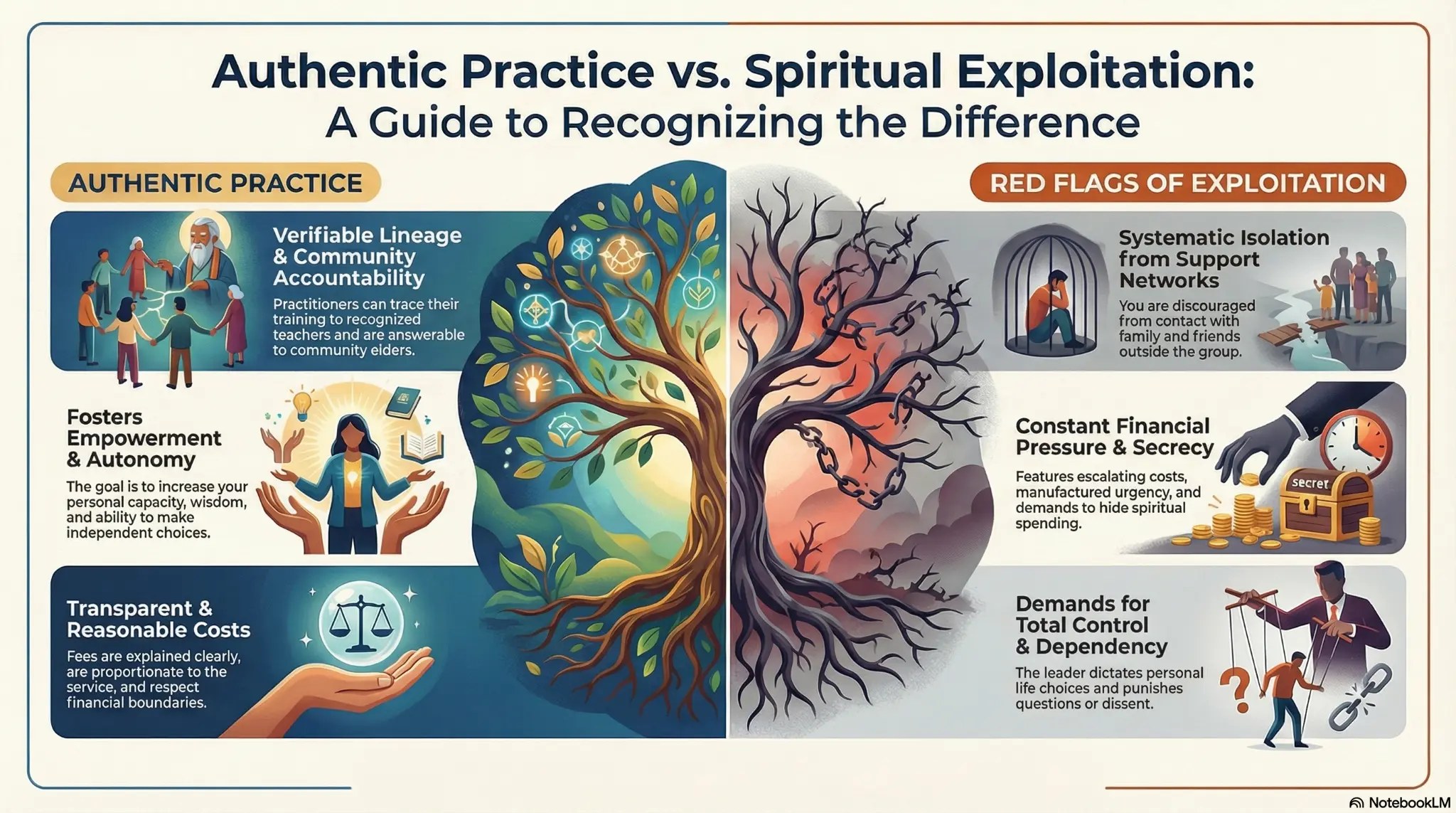
This guide illustrates the key differences between authentic spiritual practice grounded in tradition and accountability, versus exploitation tactics used by those who pervert these sacred traditions for personal gain.